
Milkweed Hive and Spot the Queen
I finally got around to naming one of my swarm hives. Actually a reader and fellow beekeeper, Mary Lou Chase, suggested the name because her bees were foraging on the blossoms at the time. She even sent me this beautiful picture she took of her bees on a Milkweed flower. Isn’t it magnificent? Thank you Mary Lou!
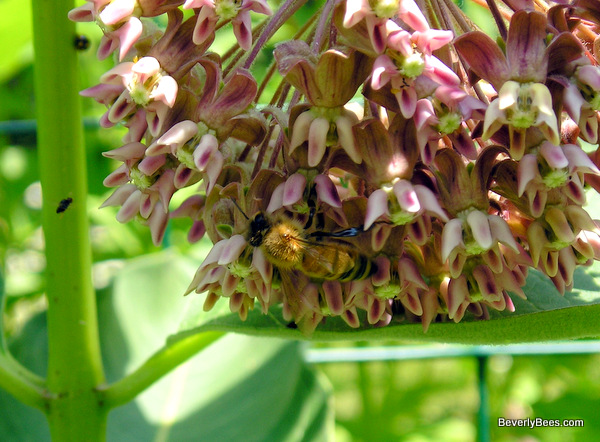
I absolutely adore milkweed. I have fond memories as a child of running through fields of Milkweed, picking and opening the pods and feeling the soft silky feathery seeds. I used to collect the brightly striped Monarch Butterfly caterpillars off the plants and feed them milkweed until they spun a lovely flourescent green chrysalis. I waited patiently for them to transform and was thrilled when they finally hatched into beautiful butterflies and I would get to set them free. I never needed to order a butterfly cage or caterpillars in the mail. I had them right in my backyard, thanks to the milkweed plant. So as you can imagine my childhood memories have a strong affinity to milkweed and this plant is dear to my heart.
Besides my love for it and its importance as a food source to Monarch Butterflies, the flowers are a wonderful source of nectar for honeybees in the summer when the plant blooms. Milkweed nectar can be so abundant that you can see it fall out of the blossom when you shake the flower. I have created a separate page for this hive under The Apiary where all its posts will be published, so you can easily follow along with its progress.
After I captured this hive off the “power lines” at the end of May, I rehived them in a 10 frame Langstroth hive on wired wax foundation. They have been moving along very nicely and are currently building out their second deep. For the most part I have left them alone and only performed a full inspection on this hive twice. Here are a few pictures of their progress. These are from June 24th which is the first real inspection I did of this hive besides just pulling a frame a few weeks after they were hived to check for eggs.
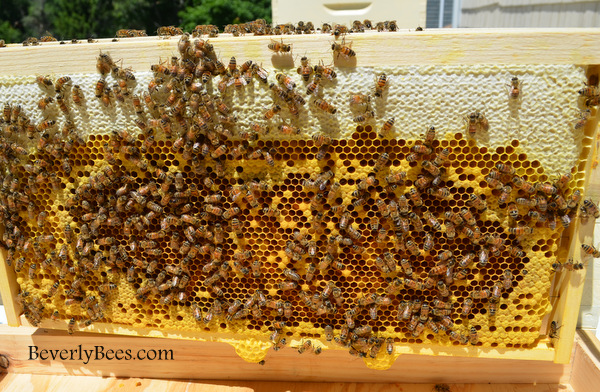
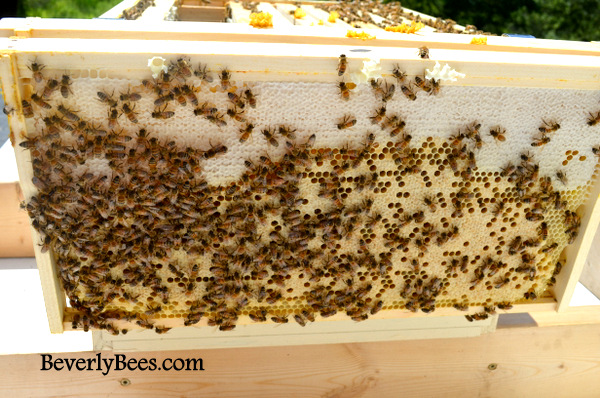
Here you can see they were storing capped honey up top and building ladder comb down below. The bees use ladder comb so they don’t have to fly up into the frame but can walk up onto it instead. I left it for them to use. My other hives have slatted racks and don’t build this comb on the frame bottoms because they do not have room. This one does not have a slatted rack so the ladder comb was interesting to see.
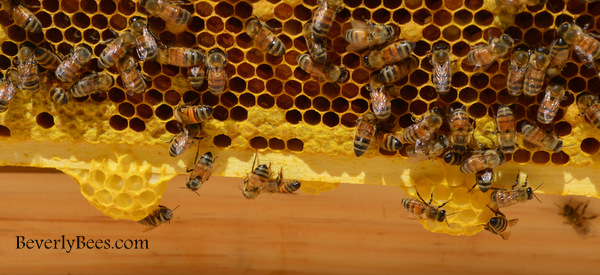
This picture shows a nice brood pattern. Notice how there are two straight lines of cells where no eggs have been laid. This is because the wire was not embedded properly after the wax was put into the frame. As a result, the queen will not lay eggs there.
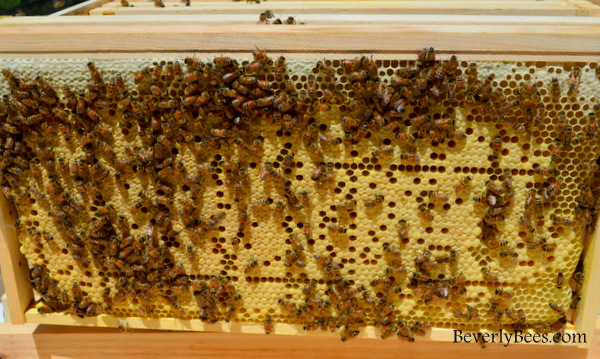
Here are a few pictures from my last inspection on July 10th. This shows a frame with a great brood pattern and capped honey at the top. This hive is extremely gentle. On the first inspection I dropped a frame back into the hive while trying to lift it out and they hardly made a sound. Most of my hives would have been upset by that.
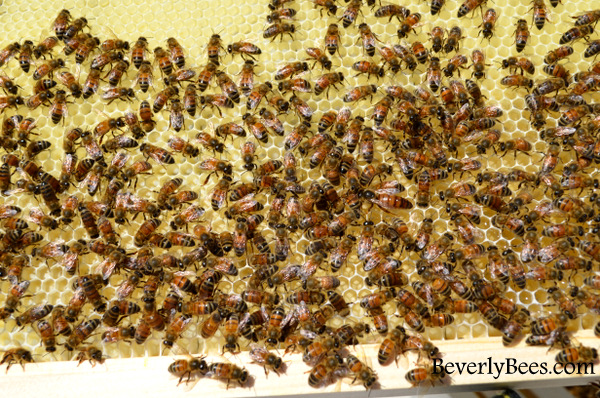
On my last inspection I finally found the queen for the first time. Can you spot her on this frame?
See why she was hard for me to spot previously? She is the same color as the workers. She looks like a mutt to me, which I am very excited about actually. I’m happy to have mutt genetics in the apiary. All my other queens are Italians with the exception of one Carniolan. If anyone has another idea of the type of queen this may be please leave me an answer in the comments below.

Here’s another game of spot the queen. Can you see her here?
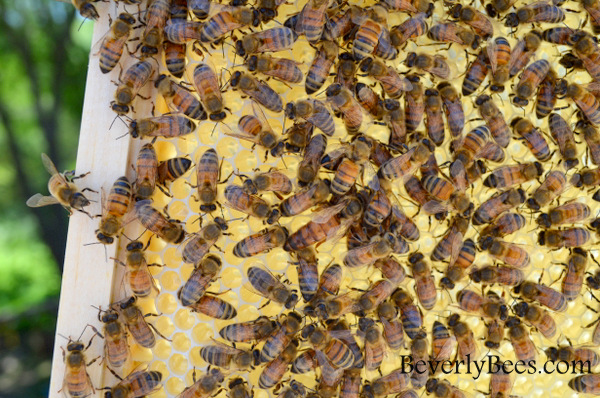
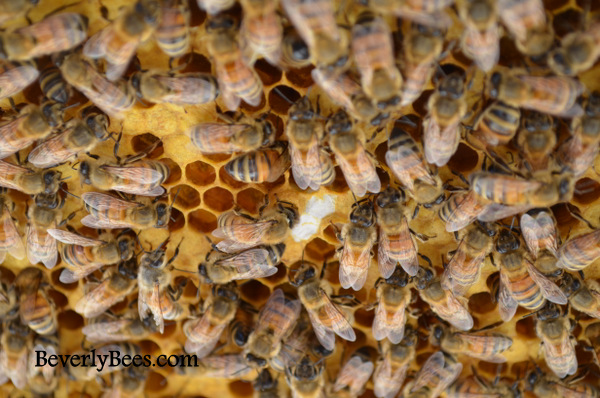
I see 4 eggs in the cells in this picture? How may do you count?
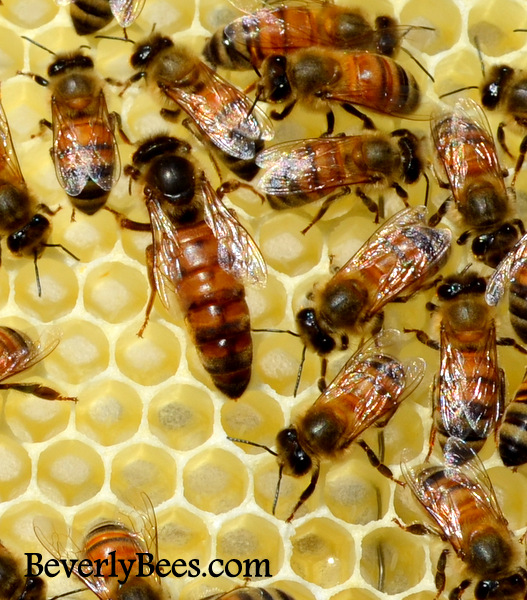
Now for one that stumped me. Anyone know what this white capping on the brood frame is? Is it just capped honey? If you do know please leave an answer in the comments below.
To stay up to date on the latest posts please subscribe to our free email newsletter here.
Other Posts You May Enjoy:
- Bee Swarm Call 1 – “There’s A Bee Swarm On The Power Lines”
- Swarm Call 2 – “There’s Another Bee Swarm Near The Power Lines”
- Flame Duct Tape, A Rock, Orange String And Debbie’s Bee Swarm
- Swarm Call 3 – “There’s A Bee Swarm In My Bushes”
- Duct Tape, A Rock And A String Saved My Swarm
This post was shared on the Barn Hop.